Earthquake Safety for Renters
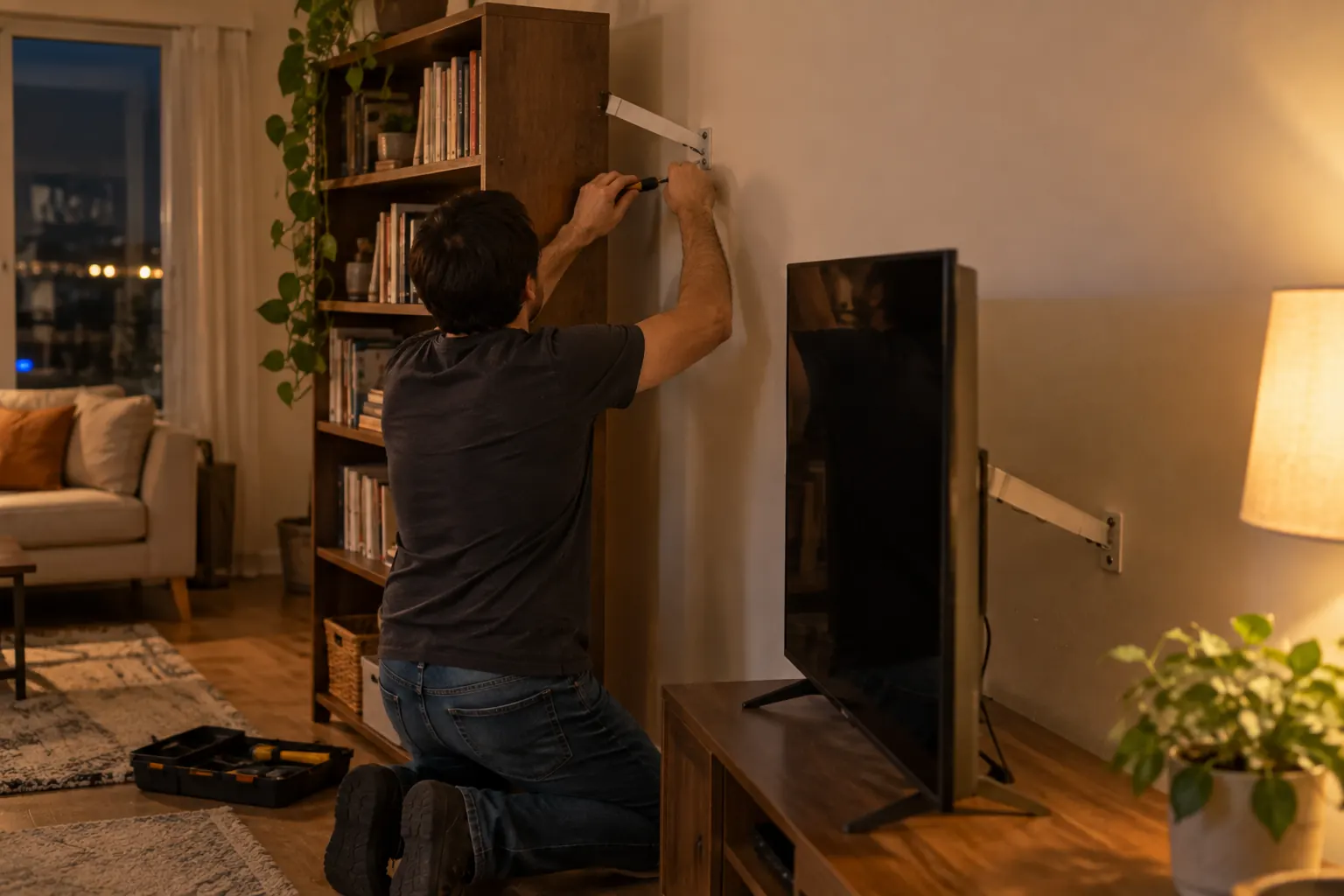
Renters get told to make an earthquake plan and then discover that most of the advice assumes they can drill into walls, replace a water heater or retrofit a foundation. This covers what you can actually do in a place you do not own, and where the line sits between your responsibility and the landlord's.
Start by finding out what you rented
You can learn a lot without an inspection:
- Year built. Usually in the listing or public property records. It tells you which code era the building belongs to.
- Construction type. Wood frame, concrete, or unreinforced masonry. Older brick buildings without visible retrofit anchors are the highest risk category in most US cities.
- Soft story. Look at the ground floor. Tuck under parking or wide retail glazing with living units above is the classic vulnerable configuration in multifamily housing, and several cities now have mandatory retrofit programs targeting exactly this.
- Retrofit evidence. Steel plates and large bolt heads on the exterior of a masonry building indicate a retrofit. Some jurisdictions publish retrofit compliance status publicly.
If your city has a mandatory soft story or unreinforced masonry retrofit ordinance, the compliance status of your building is often a matter of public record. That is worth ten minutes before you sign.
Questions worth asking before signing
- Has the building been seismically retrofitted, and when?
- If the city has a retrofit ordinance, is this building compliant?
- Is the water heater strapped?
- Are there flexible connectors on gas appliances?
- May I anchor furniture to the walls, and how should the holes be handled at move out?
The last one matters more than it sounds. Getting written permission to anchor furniture, with an agreement about patching at move out, converts the single most effective safety measure from a deposit risk into a nonissue. Most landlords say yes.
What you can do without permission
- Move heavy things down. Anything above head height that could fall goes to a low shelf.
- Clear the space over beds and seating. No mirrors, artwork or shelving above where people sleep or sit.
- Move the bed away from windows.
- Use museum putty or removable adhesive on smaller items: vases, electronics, decorative objects. It leaves no damage.
- Cabinet latches. Adhesive child safety latches on upper cabinets, no drilling.
- Tension rods or removable straps for freestanding shelving where drilling is not permitted. Less effective than anchoring, better than nothing.
- Keep shoes and a flashlight by the bed.
- Keep exit routes clear.
What is the landlord's responsibility
This varies by state and city, so the general principles rather than a legal answer:
- Structural condition is the owner's responsibility. You are not expected to retrofit a building you rent.
- Mandatory retrofit ordinances place the obligation on the owner. Where such programs exist, deadlines and compliance are the owner's problem, and the status is usually public.
- Water heater strapping is commonly a landlord obligation in seismic states, and it is cheap to remedy.
- Habitability generally requires the unit to be safe and structurally sound. Significant unrepaired damage after an event is a habitability question.
Put requests in writing. A dated email creates a record that matters if there is a dispute later.
Renters insurance and earthquakes
This is the part renters most often get wrong.
- A standard renters policy generally excludes earthquake damage. Coverage requires a separate policy or endorsement.
- The landlord's insurance does not cover your belongings. It covers the building.
- Additional living expenses matter more than contents for most renters. If the building is red tagged, you need somewhere to live while paying whatever rent obligation survives. Check whether the policy covers that and for how long.
- Deductibles on earthquake coverage are typically a percentage of the insured amount, not a flat sum.
Your plan as a renter
- Know two exits from the building and where you would assemble.
- Know where the gas and water shutoffs are, even if operating them is not your job.
- Agree on a contact outside the region with family or roommates.
- Keep a compact kit: water, food that needs no cooking, flashlight, power bank, first aid, medication, cash, copies of documents, sturdy shoes.
- Photograph your belongings and store the photos in the cloud. This is what an insurance claim runs on.
- Keep a digital copy of the lease and the policy.
When the honest answer is to move
Some buildings are not worth staying in, and it is reasonable to weigh that:
- Unreinforced masonry with no evidence of retrofit
- An obvious soft story in a jurisdiction where retrofit is mandatory and the building is not compliant
- Visible structural damage the landlord will not address in writing
- Nonpermitted structural alterations, such as removed walls or columns
You cannot retrofit someone else's building. Where the structure is the problem, the only lever a renter has is the lease.
Conclusion
As a renter you control the contents, the plan and the insurance, and you influence the rest through what you ask before you sign. Anchor what you are allowed to anchor, get earthquake coverage that includes living expenses, and check the building's retrofit status while you still have the option to walk away.
If you are weighing a specific building and want a straight read on its structural risk, book a call.
Frequently Asked Questions
Is my landlord responsible for earthquake retrofitting?
Structural condition is generally the owner's responsibility, and where cities have mandatory soft story or unreinforced masonry retrofit ordinances, the obligation and the deadline sit with the owner. Compliance status is often a matter of public record.
Does renters insurance cover earthquake damage?
A standard renters policy generally excludes it; you need a separate policy or endorsement. Note also that the landlord's insurance covers the building, not your belongings. For most renters the important coverage is additional living expenses if the unit becomes uninhabitable.
How can I secure furniture if I cannot drill into the walls?
Ask for written permission first, with an agreement about patching at move out; most landlords agree. Without permission, use museum putty on smaller items, adhesive cabinet latches, tension rods for shelving, and relocate anything heavy to low shelves.
How do I tell if my building is high risk?
Check the year built, the construction type, and the ground floor. Unreinforced masonry without visible retrofit anchors and tuck under parking with units above are the two highest risk configurations in US multifamily housing. Many cities publish retrofit compliance status.
What should I ask before signing a lease?
Whether the building has been retrofitted and when, whether it complies with any local retrofit ordinance, whether the water heater is strapped, and whether you may anchor furniture to the walls.
Similar Articles
Earthquake Preparedness: What to Do, in the Right Order
Preparedness starts with the building, not the kit. Structure, securing contents, household plan and supplies, plus what US...
Read articleTurkey: InsuranceDASK Explained: Turkey's Compulsory Earthquake Insurance
What DASK covers, what it excludes, why the maximum sum insured is the real limitation, and what foreign property owners in...
Read articleResidential DesignHow to Build an Earthquake Resistant House
What actually makes a house survive an earthquake: site, plan regularity, a fastened load path and secured contents. Plus the...
Read article