Earthquake Preparedness: What to Do, in the Right Order
Most earthquake preparedness advice starts with a supply kit. That is the wrong order. The kit matters only if the building stays up and nothing heavy lands on you first. This walks through it in the sequence that actually reduces risk: building, contents, plan, then supplies.
1. Know what you are living in
Preparedness that ignores the structure is incomplete. What to find out:
- Year built and under which code. Wood frame housing built before the 1970s commonly lacks foundation anchorage. Concrete and masonry buildings predating modern ductile detailing are a different and more serious category.
- Is the house bolted to its foundation? In a crawl space, look for anchor bolts through the sill plate. Their absence is the most common serious deficiency in older US housing and the cheapest to fix.
- Are there cripple walls? Short stud walls between foundation and first floor. Unsheathed, they are a known collapse mechanism.
- Is there a soft story? A garage opening or wide glazing under living space with little bracing at that level.
- Unreinforced masonry chimney? A common life safety hazard in otherwise sound houses.
If you rent, you can still ask the landlord these questions, and some of the answers are in public permit records.
2. Secure the contents: the highest return hour you will spend
In earthquakes that do not collapse buildings, injuries are dominated by things falling and things breaking underfoot. This work needs no engineer and no permit.
Anchor
- Bookcases, wardrobes, tall dressers and display cabinets: strapped or fixed with L brackets into studs, not into drywall
- Water heater: strapped at the upper and lower third, with flexible gas and water connectors
- Television and heavy equipment on shelving
- Refrigerator: anchored at the top so it cannot tip over
Rearrange
- Nothing heavy hanging over beds or seating
- Heavy items on low shelves
- Latches on upper kitchen cabinets
- Beds moved clear of windows
- Exit routes and doorways kept clear
Utilities
- Know where the gas shutoff is and how to operate it. Keep a wrench nearby if the valve needs one.
- Know where the main electrical panel and water shutoff are.
- Flexible connectors on gas appliances.
One caution on gas: shut it off only if you smell gas, hear it escaping, or see damage to the line. Utilities generally require a professional to restore service, and unnecessary shutoffs during a widespread event mean long waits.
3. Household plan
Assume cell networks are congested or down for hours. Build the plan around that.
- Two meeting points. One immediately outside the building, one outside the neighborhood. Everyone knows both.
- A contact outside the region. Local circuits congest first while long distance sometimes still connects. Everyone calls the same person and information collects there.
- Text, do not call. Short messages get through congested networks when voice calls will not.
- Children know the home address and the contact number. Written on a card in their bag for younger kids.
- Know the school and workplace evacuation and release procedures. Who collects whom, from where, decided in advance.
- Digital copies of documents. Deed or lease, ID, insurance policy, prescriptions.
- Practice once a year. Drop, cover and hold on, plus the exit route.
4. The kit
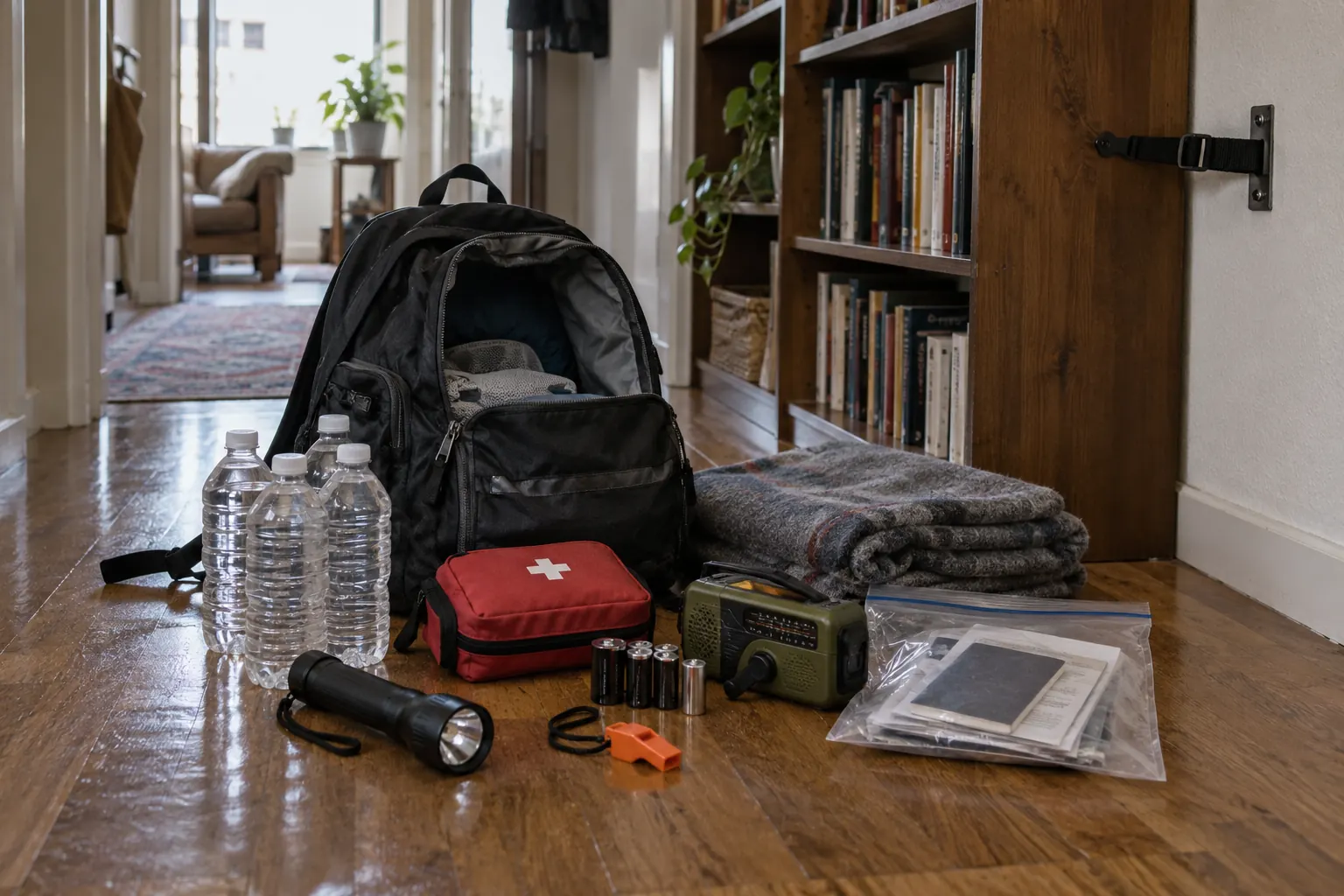
Plan for a minimum of three days, and longer if you are in an area where response could be slow. Keep it near an exit where everyone can find it.
Water and food
- One gallon of water per person per day, three days minimum. This covers drinking and basic sanitation.
- Food that needs no cooking: canned goods, dried fruit, nuts, energy bars, crackers. Pack a manual can opener.
- Infant formula and supplies if applicable. Pet food if applicable.
Health
- First aid kit: sterile gauze, bandages, adhesive dressings, antiseptic, scissors, gloves, tape
- A week of any prescription medication. Check expiry annually.
- Pain relief and any over the counter items you rely on
- Spare glasses or contact lenses
Light and communication
- Flashlight and spare batteries. No candles; open flame is dangerous when a gas leak is possible.
- Battery or hand crank radio. Broadcast continues when networks do not.
- Charged power bank.
- Whistle. The lowest energy way to signal from under debris.
Other
- Cash in small bills. Card systems may be down.
- Heavy gloves and sturdy closed shoes. Keep shoes by the bed.
- Wet wipes, toilet paper, garbage bags, personal hygiene items
- Copies of documents in a waterproof bag
- Spare keys
During the shaking
- Drop, cover and hold on. Get under a sturdy table, protect your head and neck, hold the table leg. No table means dropping beside an interior wall.
- Do not try to run outside while it is shaking. Stairwells and doorways are among the more dangerous places to be.
- Do not use elevators.
- Outdoors: move away from buildings, power lines and glass facades.
- Driving: pull over clear of overpasses, bridges and power lines, and stay in the vehicle.
After
- Check yourself and the people with you.
- Put on shoes. Broken glass and debris are the most common injury.
- If you smell gas or see a damaged line, shut off the gas, ventilate, and do not operate electrical switches.
- If the building shows significant damage, evacuate before aftershocks.
- Call emergency services only for an actual emergency; text to check on family.
- Follow official sources and do not forward unverified information.
Insurance is part of preparedness
Standard homeowner and renter policies in the United States generally exclude earthquake damage. Earthquake coverage is a separate policy or endorsement, and it typically carries a substantial deductible expressed as a percentage of the insured value rather than a flat amount.
Two things worth checking before you need them: whether your policy covers the structure, the contents, or both; and whether it covers additional living expenses if the property is uninhabitable. Those two answers determine what your recovery actually looks like.
Conclusion
Start with the building, secure everything that can fall, agree the plan while everyone is calm, then pack the kit. That order puts your effort where the risk actually is.
If you want a clear answer about the structure itself, book a call and we will go through what assessment is warranted and what the results would mean.
Frequently Asked Questions
How much water should an earthquake kit have?
One gallon per person per day, three days minimum, covering drinking and basic sanitation. Longer if you are in an area where emergency response could be delayed.
Should I shut off the gas after an earthquake?
Only if you smell gas, hear it escaping, or see damage to the line. Utilities generally require a professional to restore service, and unnecessary shutoffs during a widespread event can mean long waits without gas.
Does homeowners insurance cover earthquake damage?
Standard US homeowner and renter policies generally exclude it. Earthquake coverage is a separate policy or endorsement and typically carries a deductible expressed as a percentage of insured value rather than a flat amount.
What is the cheapest thing I can do to prepare?
Secure the contents. Anchoring tall furniture and the water heater, moving heavy items low and clearing the space above beds addresses the most likely source of injury and costs very little.
Where should I be during the shaking?
Drop, cover and hold on where you are. Get under a sturdy table, protect your head and neck. Do not run outside while it is shaking and do not use elevators. Outdoors, move clear of buildings, power lines and glass.
Similar Articles
Earthquake Safety for Renters
What you can do about earthquake risk in a home you do not own: what to ask before signing, what you can secure without...
Read articleResidential DesignHow to Build an Earthquake Resistant House
What actually makes a house survive an earthquake: site, plan regularity, a fastened load path and secured contents. Plus the...
Read articleBuilding ManagementEarthquake Safety Guide for Building Managers
A practical guide for building managers: structural assessment, nonstructural hazards, emergency planning, and when to bring...
Read article